
You've noticed a few shingles curling at the edges. Maybe there's a dark patch on the ceiling after a heavy rain. You call around, get a couple of quotes, and suddenly you're staring at numbers that range from $8,000 to $25,000 — and you're not sure what's actually worth paying for.
This is where most homeowners start second-guessing everything. Do you go with the cheapest option and hope it lasts? Or stretch the budget for something that might save you money down the road?
The honest answer is that affordable roofing materials aren't always the cheapest ones on the shelf. Affordability is really about what a roof costs you over its entire life, not just the initial cost.
In this article, we'll walk through five of the most common affordable roofing materials we install here in Kitchener-Waterloo, what they actually cost, and where each one makes sense.
What Makes a Roofing Material Affordable?
Before comparing the options, it helps to agree on what "affordable" actually means in the context of a roof.
The upfront material and labour cost is only part of it. You also need to factor in lifespan, maintenance costs, and how well the material holds up in Ontario's climate. We deal with freeze-thaw cycles every single winter, making water intrusion a major risk. Add heavy snow loads and the humidity that comes with our shoulder seasons, and not every material performs equally.
A roof that costs $6,000 installed but needs replacing in 12 years isn't technically cheaper than one that costs $10,000 and lasts 30. When you break it down to cost per year, the most affordable option isn’t always the one with the cheapest upfront cost.
Now, let’s compare the 5 most affordable roofing materials.
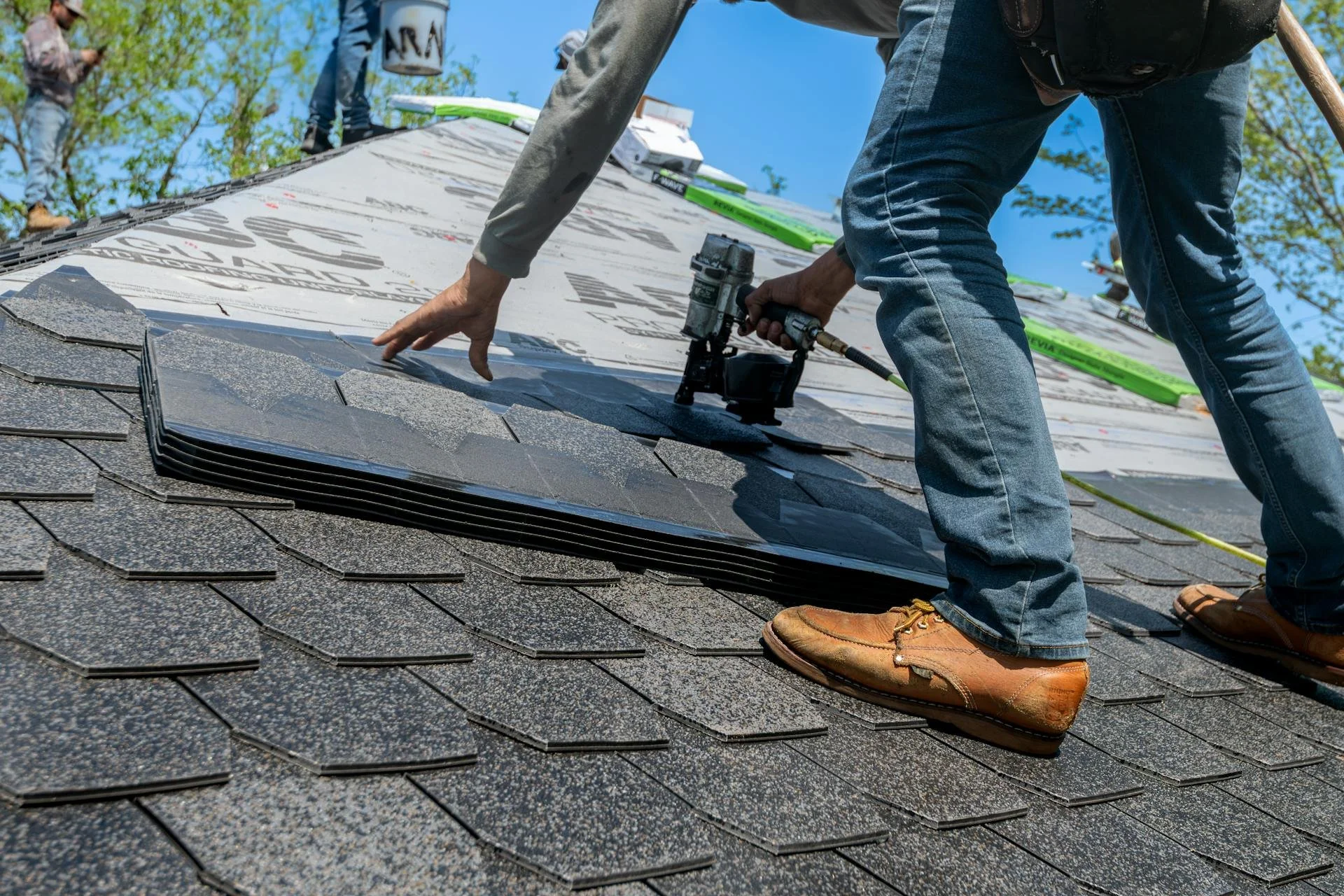
1: Asphalt Shingles
Asphalt shingles are what's on most homes in Ontario, and for good reason. They're widely available, easy to install, and compatible with most residential roof designs. They're also what most roofing contractors, including us, have installed hundreds of times.
Cost range: $4,000–$8,000 for a typical single-family home, depending on roof size and complexity.
Lifespan: 20–30 years for architectural (dimensional) shingles. Three-tab shingles are cheaper but typically top out around 20 years.
Pros
Lowest upfront cost among the durable options
Wide range of colours and styles
Easy to repair, individual shingles can be replaced without disturbing the whole roof
Most contractors in the area are experienced with them
Cons
Not as long-lasting as metal or composite
Can be vulnerable to ice dam damage if attic insulation and ventilation aren't up to par
Quality varies significantly between manufacturers, not all shingles rated for 30 years actually reach it
To ensure consistent quality, we work with North America’s top roofing material manufacturers, GAF and Certainteed, to bring high-quality shingles to our clients. As a GAF-certified roofer, we can offer exclusive warranties on their shingles, ensuring your investment is protected.
You can learn more about what it means to be a GAF-certified roofer here: Should I Pick a GAF Certified Roofing Company in Ontario?
Architectural shingles are our default recommendation for most Kitchener-Waterloo homeowners. The asphalt shingles cost is manageable and perform well in Ontario winters, making it one of the most popular and commonly used materials in Waterloo. If you’re interested in installing new roof shingles, start with a free roof inspection!
2: Metal Roofing
Metal roofing has moved well beyond commercial and agricultural buildings. Standing seam steel and stone-coated metal panels are showing up on residential homes throughout Waterloo Region, and there's a good case for them depending on your situation.
Cost range: $12,000–$22,000 installed for most residential homes. Premium profiles and finishes push it higher.
Lifespan: 40–70 years, depending on the product and installation quality.
Pros
Exceptional longevity, many metal roofs outlast the mortgage
Handles heavy snow well; the slick surface sheds snow naturally
Strong resistance to ice damming when properly installed with underlayment
Energy efficiency benefits, reflective coatings reduce summer cooling costs
Low maintenance once installed
Cons
Higher upfront cost than most homeowners expect
Can be noisy during heavy rain without proper insulation and underlayment
Not all contractors have experience with proper installation
Installation mistakes are harder to fix than with shingles
Expansion and contraction in Ontario's temperature swings need to be accounted for during installation
If you're planning to stay in your home long-term and want something you genuinely won't have to think about for decades, metal roofing cost pays for itself over time. If you're likely to sell in the next 10 years, expect less return on your investment.
3: Rolled Roofing
Rolled roofing is asphalt-based roofing material that comes in rolls rather than shingles. It's laid in overlapping horizontal strips and is primarily used on low-slope sections where standard shingles won't shed water effectively.
Cost range: $1,500–$3,500 installed, depending on the size of the area covered.
Lifespan: 5–10 years under typical conditions.
Pros
Very low upfront cost
Quick to install
Suitable for low-pitch roofs where shingles aren't appropriate
Cons
Short lifespan compared to every other option on this list
Prone to cracking and blistering, especially through Ontario's freeze-thaw cycles
Limited aesthetic appeal
Not suitable as a primary roofing material on a main structure
We install rolled roofing on garages, sheds, and low-pitch additions, places where budget is the primary driver and longevity is less critical. It's not something we'd recommend for your main roof. The low upfront cost is real, but it may become less appealing when you consider the five-to-ten-year replacement cycle, that’s a much shorter lifespan than other roofing materials.
4: Rubber Roofing (EPDM)
EPDM (ethylene propylene diene monomer) is a synthetic rubber membrane most commonly used on flat or low-slope roofs. If you have a flat-roofed addition, a walk-out roof section, or a garage with a flat roof, EPDM is likely the most practical and durable option available.
Cost range: $5,000-$10,000 for a typical residential flat or low-slope section.
Lifespan: 20-30 years with proper installation and minimal maintenance.
Pros
Excellent performance in Ontario's climate, rubber handles freeze-thaw cycles well
Seamless or minimal-seam installation reduces leak risk
Lighter weight than many alternatives
Repairable with compatible patching materials when damage does occur
Cons
Limited to flat or low-slope applications, not suitable for pitched roofs
Appearance is industrial; not appropriate where aesthetics matter
Seams and penetrations (vents, skylights) need to be carefully detailed, this is where most leaks originate
Some EPDM products are more UV-resistant than others; quality varies
For Ontario homeowners with flat sections on their home, EPDM rubber roofing is one of the most reliable choices available at a reasonable price point. It's a material that genuinely performs in our climate, which isn't something you can say about every cheap roofing material on the market.
5: Composite or Synthetic Roofing
Composite roofing is a newer category that's grown significantly in the past 15 years. These products are typically made from a mixture of recycled plastics, rubber, and fibreglass, engineered to mimic the look of cedar shake or natural slate — without the weight, cost, or maintenance demands of the real thing.
Cost range: $9,000–$18,000 installed for most residential homes, depending on the product.
Lifespan: 30–50 years, with some manufacturers offering transferable warranties.
Pros
Durable and impact-resistant — many products carry Class 4 hail ratings
Lighter than real slate, which means no structural reinforcement required
Low maintenance
Holds up well in freeze-thaw conditions
Genuinely attractive; can satisfy HOA requirements while avoiding the cost of natural slate
Cons
Higher upfront cost than asphalt shingles
Fewer contractors have experience with it compared to asphalt
Quality varies considerably between manufacturers — researching the specific product matters
Relatively newer in widespread residential use, so long-term field performance data is still catching up to manufacturer claims
Composite roofing sits in an interesting middle ground between asphalt shingles and metal. It's a strong option for homeowners who want something that looks distinctive, lasts longer than standard shingles, and handles Ontario winters without demanding much upkeep.
Which Affordable Roofing Material Lasts the Longest?
If lifespan is your main concern, metal roofing wins outright at 40–70 years. But it also costs two to three times what asphalt shingles do upfront.
Here's a rough way to think about cost per year of service:
Asphalt shingles: $4,000–$8,000 / 25 years = roughly $160–$320 per year
Rolled roofing: $1,500–$3,500 / 5–10 years = roughly $200–$400 per year
EPDM rubber: $5,000–$10,000 / 25 years = roughly $200–$400 per year
Composite roofing: $9,000–$18,000 / 40 years = roughly $225–$450 per year
Metal roofing: $12,000–$22,000 / 55 years = roughly $220–$400 per year
When you frame it this way, asphalt shingles come out on top, especially for homeowners who don't plan to stay in the home for 40+ years.
Metal and composite can make more financial sense the longer you plan to stay, or if you're buying a forever home.
The best roofing materials for the money are the ones that match your situation, not the ones with the cheapest price point or highest ratings on a spec sheet.
How to Choose the Right Roofing Material for Your Home
Here are a few questions to ask yourself when choosing roofing materials:
What's your roof pitch?: Most asphalt shingles, metal, and composite products require a minimum slope to shed water effectively. EPDM and rolled roofing are designed for flat or low-slope applications.
What's your realistic budget?: Be honest here — a roof that stretches your finances can cause problems even if the material choice is technically sound. A solid asphalt shingle installation within budget beats a metal roof that strains your finances.
How long do you plan to stay?: If you're in this home for the next five to seven years, investing in a 50-year roof may not make sense. If it's your long-term home, the calculus shifts.
Are there HOA or neighbourhood aesthetic requirements?: Some communities restrict certain roofing styles or colours. Composite roofing is often a good solution here — it mimics premium materials without the premium price.
How much maintenance are you willing to deal with?: Metal and composite are genuinely low-maintenance once installed. Asphalt shingles may need occasional repairs and benefit from periodic inspection, especially after severe weather.