
Storm Damage on Roofs in Kitchener-Waterloo: A Seasonal Guide (2026)
Storm Damage on Roofs in Kitchener-Waterloo: What Every Homeowner Needs to Know
Storm damage on a roof in Kitchener-Waterloo can include missing shingles, damaged flashing, granule loss, dented soffit, and clogged or detached eavestroughs, and the repair urgency depends heavily on the season the damage occurs.
Waterloo Region's climate doesn't give roofs a break. Autumn brings wind events strong enough to lift shingles, winter delivers ice storms and heavy snow loads, spring floods the region with intense rainfall that exposes every weakness winter left behind, and summer produces severe thunderstorms and hail that can age a roof by years in a single afternoon. Each season creates distinct damage patterns, and storm damage on a roof left unrepaired in Ontario's climate can lead to ice damming, interior water infiltration, and mould growth within weeks.
Across all four seasons, the five components most frequently damaged in Waterloo Region are asphalt shingles, soffit, fascia, flashing, and eavestroughs. This guide walks Kitchener-Waterloo homeowners through what to watch for after each season's storms, how to reduce your exposure, and when it's time to pick up the phone and call a local roofing contractor.

Roof Damage in Autumn: What to Do Next
Quick answer: After an autumn storm, check for missing or curled shingles, exposed underlayment, displaced ridge caps, and water stains in your attic. If you find any of these, or if a branch has hit your roof, book a professional inspection within 48 hours. That way moisture doesn't get locked into the roof deck before the first freeze.
Wind and Rain Damage
How does autumn wind damage a roof?
Autumn storms in Waterloo Region are no minor inconvenience. Sustained winds of 60 to 80 km/h are common from September through November. That's enough force to:
Lift tab shingles
Strip protective granules
Pry open flashing seals that looked fine all summer
Once a shingle edge lifts, wind-driven rain gets underneath and reaches the roof deck. It causes rot and mould there well before you see staining on your ceiling.
Signs of wind damage to look for after a storm
From the ground:
Missing or curled shingles
Dark patches where the felt underlayment is exposed
Displaced or missing ridge caps
From inside the attic:
Water stains on the attic sheathing
Any one of these means your roof already has an active vulnerability.
Can you repair just part of the roof, or does it need replacing?
It depends on how widespread the damage is. If you catch it early, a spot repair is often enough.
| Damage | Usually Needs |
|---|---|
| A few lifted or loose shingles | Re-nailing |
| Deteriorated sealant around flashing | Resealing |
| Isolated damaged tabs | Tab replacement |
| Widespread granule loss across a full roof plane | Section or full replacement assessment |
For a full walkthrough, see our guide on whether you can repair just part of your roof in Kitchener.
How to prevent wind damage
The best prevention is a pre-winter roof inspection in September or October. Loose shingles and worn flashing sealant are quick and affordable to fix before storm season peaks.
Why the 48-hour window matters
If you see missing shingles, exposed decking, or water stains after a storm, contact a local Kitchener-Waterloo roofing contractor within 48 hours. Moisture that gets into the deck before the first freeze stays trapped there and sets up serious ice dam damage through the winter.
Falling Leaves, Branches, and Debris
How do trees and leaves damage a roof?
Older Kitchener and Waterloo neighbourhoods have mature tree canopies. They're beautiful until a heavy branch comes down in an October windstorm. Trees cause roof damage in two ways:
1. Impact damage from falling branches
Punctured shingles
Dented soffit panels
A cracked or compressed roof deck, even when the branch only seemed to skim the surface
2. Moisture damage from wet leaf mats
Leaves trap moisture against shingles for weeks
Granule loss speeds up
Shingles wear out faster, and you often can't see it until the damage is advanced
Why damaged soffit is more than a cosmetic problem
A damaged soffit gives insects and pests a way in right before winter. Our article on why bugs are coming in through your roof in Kitchener-Waterloo explains how that happens.
How to protect your roof from trees and debris
Trim overhanging branches to at least 2 metres of clearance from the roof
Install eavestrough guards to cut down on debris buildup
Clear leaf mats off roof surfaces before they settle in
Planning eavestrough upgrades? See our breakdown of eavestrough replacement costs in Kitchener-Waterloo.
What to do if a branch hits your roof
Get a professional inspection for any fallen branch, whatever its size. Don't rely on a visual check from the ground. The shingles can look intact while the deck underneath is cracked or compressed.
Autumn Roof Damage: Quick Reference
| Damage Type | Warning Signs | What to Do | Urgency |
|---|---|---|---|
| Wind damage | Missing or curled shingles, exposed underlayment, displaced ridge caps | Professional inspection; spot repair if caught early | Within 48 hours |
| Rain intrusion | Water stains in attic or on ceiling | Inspection to check the roof deck for moisture | Within 48 hours |
| Branch impact | Visible debris, dented soffit, any branch contact | Professional inspection, even if shingles look fine | As soon as possible |
| Leaf buildup | Wet leaf mats sitting on the roof surface | Clear debris, install eavestrough guards, trim trees | Before winter |
-
Within 48 hours. Moisture that gets into the roof deck before the first freeze stays trapped and can lead to ice dam damage over the winter.
-
Yes. Winds of 60 to 80 km/h can lift shingle edges, strip granules, and loosen flashing seals. That lets rain reach the deck even when no shingles are missing.
-
Yes. A branch can crack or compress the roof deck even when the shingle surface looks undamaged from the ground.
-
September or October, before storm season peaks and before the first freeze.
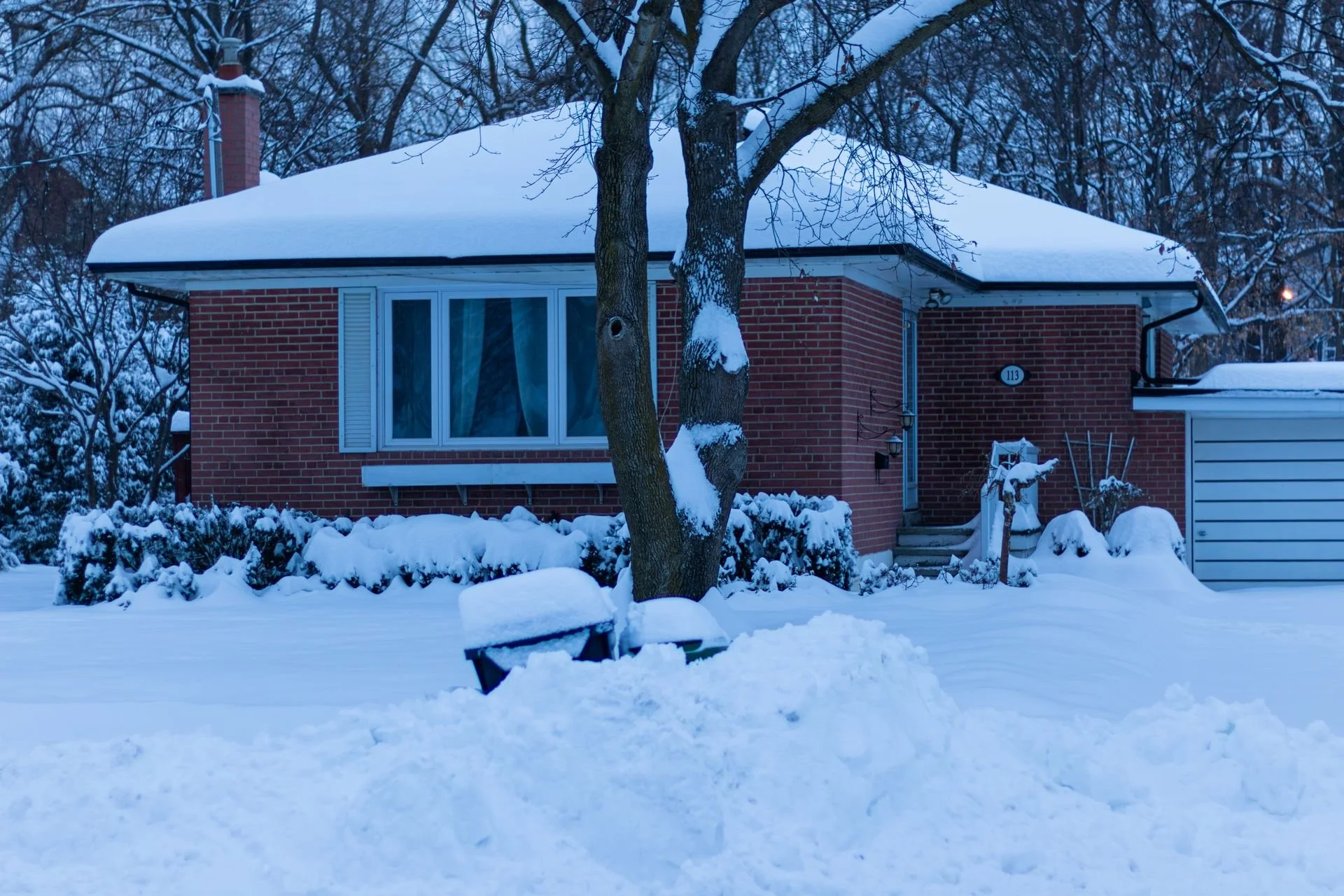
Roof Damage in Winter: What to Do Next
Quick answer: Ice dams and winter storms are the two biggest winter threats to Kitchener-Waterloo roofs. Ice dams are caused by attic heat loss. You prevent them with proper attic insulation and soffit-to-ridge ventilation. If a winter storm damages your roof, get emergency tarping from a licensed contractor, then book a professional inspection in late winter or early spring.
Ice Dams
What causes ice dams?
Ice dams are one of the most damaging and misunderstood winter roof problems in Kitchener-Waterloo. They form in four steps:
Heat escapes through a poorly insulated attic.
The upper roof warms and melts the snowpack on top.
Meltwater runs down to the colder roof edge near the eaves.
It refreezes into an ice ridge that traps the meltwater behind it.
With nowhere to drain, that water backs up under your shingles.
What damage do ice dams cause?
Water trapped behind an ice dam can:
Saturate attic insulation
Stain ceilings
Rot the roof decking
Lift shingle tabs as it refreezes within the shingle layers
Interior damage often shows up weeks after the ice dam forms. That delay is why many homeowners never connect the leak to its cause.
How do you prevent ice dams?
Ice dams are prevented most effectively by:
Upgrading attic insulation to Ontario Building Code minimums (R-50 or higher)
Ensuring proper soffit-to-ridge ventilation
When the attic stays close to the outdoor temperature, snow melts evenly instead of in patches, and ice dams don't form.
Can you remove an ice dam yourself?
Sometimes. A channel of calcium chloride ice melt along the dam can route meltwater off the roof edge. But DIY roof melt products can damage asphalt shingles if applied incorrectly, so understand the risks first.
For safer options, see our guide on preventing and removing ice dams without roof melt in Kitchener.
| Approach | What It Involves | Best For |
|---|---|---|
| Prevention | Upgrading attic insulation to Ontario Building Code minimums and ensuring soffit-to-ridge ventilation | A lasting fix, especially if ice dams form every winter |
| Reactive (DIY) | Calcium chloride ice melt applied in a channel along the dam | Short-term relief; can damage shingles if applied incorrectly |
| Professional assessment | A roofing contractor identifies the underlying ventilation or insulation issue | Recurring ice dams or any interior leaks |
Ice dams every winter? That's a warning sign
If ice dams form on your home every winter, you have a systemic attic ventilation or insulation problem, not a one-off weather event. A Kitchener-Waterloo roofing contractor can assess the underlying cause and recommend a lasting fix.
Do flat roofs get ice dams?
Yes, but flat and low-slope roofs face a different set of ice dam risks. Learn more in our posts on ice damming on flat roofs and whether a flat roof is right for your Kitchener home.
Winter Storm Damage
How do winter storms damage a roof?
Waterloo Region gets significant snowfall and ice storms every winter. The two main threats are:
1. Heavy snow loads
A structural risk, especially on flat or low-slope roofs
2. Ice storms
Coat shingles, flashing, and eavestroughs in ice
The ice expands and contracts as temperatures swing, which:
Cracks sealants
Loosens fasteners
Can pull eavestroughs away from the fascia entirely
What is ice and water shield, and does your roof have it?
The Ontario Building Code requires ice and water shield membrane along the eaves in cold climate zones. This secondary waterproof barrier protects your home if the shingles above it are damaged in a storm.
If your roof was installed without enough ice and water shield coverage, you're more exposed than you might realise.
What to do after winter storm damage
Call for emergency roof tarping by a licensed contractor. This stops further water from getting in until a full repair can be done safely.
Schedule a professional inspection in late winter or early spring. This step is essential after any ice storm.
Why the inspection matters: winter storm damage is often invisible from the ground until snowmelt reveals the leaks underneath.
Winter Roof Damage: Quick Reference
| Damage Type | Warning Signs | What to Do | Urgency |
|---|---|---|---|
| Ice dams | Ice ridge along eaves, ceiling stains, wet attic insulation | Safely channel meltwater; fix attic insulation and ventilation | As soon as possible |
| Heavy snow load | Deep snow buildup, especially on flat or low-slope roofs | Contact a roofing contractor to assess structural risk | As soon as possible |
| Ice storm damage | Cracked sealants, loose fasteners, eavestroughs pulling from fascia | Emergency tarping, then a full professional inspection | Immediately |
| Hidden storm damage | Leaks appearing as snow melts | Book a professional inspection | Late winter or early spring |
-
Heat escaping through a poorly insulated attic melts snow on the upper roof. The meltwater then refreezes at the colder eaves, forming a ridge of ice that traps water behind it.
-
Bring attic insulation up to Ontario Building Code minimums and make sure you have proper soffit-to-ridge ventilation. That keeps the attic close to the outdoor temperature so snow melts evenly.
-
Calcium chloride ice melt can channel water off the roof, but applied incorrectly it can damage asphalt shingles. Safer alternatives are available.
-
Water backed up behind an ice dam can soak insulation and decking before it shows up inside. Interior stains often appear weeks after the dam formed.
-
Get emergency tarping from a licensed contractor to stop further water entry. Then book a professional inspection in late winter or early spring, because storm damage is often hidden until the snow melts.

Roof Damage in Spring: What to Do Next
Quick answer: Spring is the most important season to inspect your roof in Kitchener-Waterloo. Winter damage like micro-cracked shingles, saturated decking, and loose eavestroughs only becomes visible after the snow melts. Book a post-winter inspection in March or April, before spring storms peak. If your attic shows any moisture, book one immediately, because mould can take hold in insulation within 24 to 48 hours.
Heavy Rain and Spring Storms
Why is spring the most important time to inspect your roof?
Winter damage stays hidden under snow. Once the snow melts, you can finally see what's there:
Micro-cracked shingles
Saturated roof decking
Loosened eavestroughs
Then spring rain and thunderstorms arrive just as that damage is exposed.
Where do spring roof leaks start?
Water finds the path of least resistance. During prolonged spring rain, these become active leak points:
Cracked sealant around skylights
Lifted flashing at chimneys
Nail pops in shingles
Signs of spring roof damage
Inside your home:
Water stains on ceilings or in the attic
Peeling paint near the roofline
Outside and on the roof:
Granules building up in eavestroughs, a sign of faster shingle weathering
Soft spots in the roof deck where moisture has been sitting since January
What does a spring roof inspection fix?
A post-winter inspection in March or April lets you deal with problems before the spring storm window peaks:
Reflashing around roof penetrations
Resealing nail heads
Clearing blocked eavestroughs before they back up under the roof edge
If your eavestroughs need replacing, see our breakdown of the cost of new eavestroughs in Kitchener-Waterloo. Damaged fascia and soffit often show up alongside eavestrough problems, and they're covered by our soffit, fascia, and exterior services in Kitchener-Waterloo.
Moisture in your attic? Don't wait
If your attic shows any sign of moisture after spring rain, book an inspection immediately. Mould can take hold in insulation within 24 to 48 hours of prolonged dampness.
Winter Damage and Spring Roof Problems
Can a roof look fine but still be damaged after winter?
Yes. Repeated freeze-thaw cycles can leave shingles micro-cracked and brittle even when they look intact. Those weakened shingles often can't hold up to the wind gusts that come with Waterloo Region thunderstorms.
You can't see this kind of damage from the ground. A contractor can find it during a hands-on inspection.
How winter ice dam damage shows up in spring
Ice dam water that got under your shingles over winter often soaks the roof deck and the insulation below. It usually doesn't show until spring warmth starts drying the structure out.
Delayed signs of winter damage to watch for after snowmelt:
Staining on attic sheathing
Sagging sections of roof deck
Bubbling or blistering shingles
Eavestroughs pulling away from the fascia
Winter Damage vs. How It Shows Up in Spring
| Winter Cause | What It Does | Spring Warning Sign |
|---|---|---|
| Freeze-thaw cycles | Micro-cracks shingles, leaving them brittle | Shingles fail in spring wind gusts; granules in eavestroughs |
| Ice dam water under shingles | Saturates the roof deck and insulation | Staining on attic sheathing; sagging deck sections |
| Trapped moisture in the roof deck | Weakens the deck over the winter | Soft spots in the deck; bubbling or blistering shingles |
| Winter storm stress | Loosens eavestroughs and fasteners | Eavestroughs pulling away from the fascia |
How to stop winter damage from becoming structural damage
Before the next storm season:
Replace saturated insulation
Treat any mould on the decking
Re-secure eavestroughs
Book your post-winter inspection in March, before contractors' spring schedules fill up.
Spring Roof Damage: Quick Reference
| Problem | Warning Signs | What to Do | Urgency |
|---|---|---|---|
| Attic moisture | Damp insulation, water stains in the attic | Book an inspection; replace saturated insulation | Immediately (mould can form in 24–48 hours) |
| Active roof leaks | Ceiling stains, peeling paint near the roofline | Reflash penetrations, reseal nail heads, repair sealant | As soon as possible |
| Hidden winter damage | Sagging deck, blistering shingles, granules in eavestroughs | Hands-on professional inspection | March or April |
| Eavestrough problems | Blocked, overflowing, or pulling away from the fascia | Clear and re-secure, or replace | Before spring storms peak |
-
In March or April, before the spring storm window peaks. Booking in March also gets you in before contractors' spring schedules fill up.
-
Winter damage like cracked sealant, lifted flashing, and nail pops is often hidden under snow. Once it melts, prolonged spring rain turns those weak spots into active leaks.
-
Mould can take hold in insulation within 24 to 48 hours of prolonged dampness. That's why any attic moisture after spring rain calls for an immediate inspection.
-
Yes. Freeze-thaw cycles can micro-crack shingles and leave them brittle without any visible sign from the ground. A hands-on inspection can find it.
-
Staining on attic sheathing, sagging deck sections, bubbling or blistering shingles, and eavestroughs pulling away from the fascia.

Summer Storm Damage: What to Do Next
Quick answer: After a summer thunderstorm or hail event in Kitchener-Waterloo, look for shingles in the yard or eavestroughs, exposed underlayment, bent eavestroughs, and granules pooling in downspouts. Book a professional assessment within 72 hours, because many insurance adjusters require a contractor's written report to process a storm damage claim. Never climb onto your roof after a hail storm.
Wind and Thunderstorm Damage
How do summer storms damage a roof?
Environment Canada issues frequent severe thunderstorm watches and warnings for Kitchener-Waterloo between June and August. During supercell events, wind gusts regularly exceed 90 km/h. That kind of storm can:
Lift shingle tabs and ridge caps
Stress roof-to-wall connections through rapid pressure changes
Pull eavestroughs off the fascia in a single event
Signs of wind damage after a summer storm
You can check for these from the ground:
Shingles in the yard or sitting in eavestroughs
Exposed dark underlayment visible from the street
Bent or detached eavestrough sections
Why you should book an assessment within 72 hours
If you see any of these signs, get a professional assessment within 72 hours. Many insurance adjusters require a contractor's written report to process a storm damage claim.
How to reduce wind damage risk
GAF-certified shingle systems with Class F wind ratings
Proper nail pattern installation to cut down on storm uplift
Learn why choosing a GAF-certified roofing contractor in Ontario matters for this kind of installation quality.
Why summer is the best time for storm repairs
Milder conditions make it quicker to replace individual shingles and re-attach eavestroughs before autumn and winter weather returns.
Hail Damage
Can small hail damage a roof?
Yes. Hail hits Waterloo Region several times each summer, and even hailstones smaller than 2 cm can cause meaningful granule loss on asphalt shingles. Here's why that matters:
Hail knocks granules off the shingle surface.
The asphalt mat underneath is exposed to UV rays.
Shingles age faster, losing years of life rather than months.
Signs of hail damage
Circular dents or impact marks on shingles
Granules pooling in eavestroughs and downspouts
Dented aluminium soffit panels
Dented eavestrough surfaces
These signs aren't always visible from the ground. A professional post-hail inspection is worth booking even when nothing looks wrong.
Never climb your roof after a hail storm
Wet, granule-depleted shingles are extremely slippery. Leave the inspection to a professional.
Repair or replace after hail?
Widespread granule loss across multiple roof planes usually calls for full replacement rather than spot repair.
What are the best roofing materials for hail?
Class 4 impact-resistant shingles are a premium upgrade. They:
Last longer in hail-prone Ontario climates
May qualify for insurance premium discounts
Storm-Resistant Roofing Options
| Option | Protects Against | Key Benefit |
|---|---|---|
| GAF-certified shingle system with Class F wind rating | Wind uplift during severe thunderstorms | Significantly reduces storm uplift risk when installed with a proper nail pattern |
| Class 4 impact-resistant shingles | Hail impact | Longer lifespan in hail-prone climates; may qualify for insurance premium discounts |
| Metal roofing | Wind and hail | See our metal vs. asphalt comparison for the trade-offs |
Weighing your options? Our comparison of metal roofing versus asphalt shingles for storm resistance in Kitchener-Waterloo lays out the trade-offs. You can also view our GAF certification credentials to see the installation standards we're held to on every job.
Summer Storm Damage: Quick Reference
| Damage Type | Warning Signs | What to Do | Urgency |
|---|---|---|---|
| Wind damage | Shingles in yard or eavestroughs, exposed underlayment, lifted ridge caps | Professional assessment and written report for insurance | Within 72 hours |
| Eavestrough damage | Bent, detached, or dented eavestrough sections | Re-attach or replace | Within 72 hours |
| Hail damage | Impact marks, granules in downspouts, dented soffit | Professional post-hail inspection. Do not climb the roof. | As soon as possible |
| Widespread granule loss | Granule loss across multiple roof planes | Full replacement assessment | Before autumn |
-
Within 72 hours. Many insurance adjusters require a contractor's written report to process a storm damage claim.
-
Yes. Even hailstones smaller than 2 cm can cause meaningful granule loss. That exposes the asphalt mat to UV damage and speeds up shingle aging by years.
-
Look for granules pooling in eavestroughs and downspouts, dented soffit panels, and dented eavestroughs. Circular impact marks on shingles are often not visible from the ground, so book a professional inspection.
-
No. Wet, granule-depleted shingles are extremely slippery. Have a professional inspect it.
-
Class 4 impact-resistant shingles may qualify for insurance premium discounts. Check with your insurer.
-
Not always. Widespread granule loss across multiple roof planes usually calls for full replacement, while isolated damage may be repairable.
Signs Your Roof May Have Storm Damage
Whether the storm was wind, hail, or heavy rain, these are the indicators to check for across any season:
Missing or lifted shingles expose the felt underlayment to UV and moisture immediately
Cracked or split shingles allow water ingress at the fracture point with every rainfall
Granule loss showing up in eavestroughs signals accelerated shingle weathering
Damaged flashing at chimneys and vents is the most common source of interior leaks after storms
Dented soffit or eavestrough panels indicate hail impact and warrant a full roof assessment
Water stains on ceilings may appear days after the storm event, not immediately
Damaged or detached eavestroughs cause water to pool against the foundation and back up under roof edges
Fallen branches or debris on the roof surface may have caused deck damage invisible from the ground
We serve homeowners across Kitchener, Waterloo, and the broader region, including roofing services in Cambridge and surrounding Waterloo Region communities. You can read verified customer reviews for Quality Care Roofing to see how we handle storm damage assessments and repairs.
What to Do After Storm Damage to Your Roof
After storm damage on a roof in Kitchener-Waterloo, homeowners should document damage with timestamped photos, avoid climbing on the roof, and contact a GAF-certified local contractor within 48 to 72 hours to obtain the written assessment required for an Ontario home insurance claim.
Here's the step-by-step approach:
Check for visible damage from the ground using binoculars. Never climb on a wet or hail-damaged roof.
Look for signs of leaks inside your home, including attic dampness, damp insulation, and ceiling discolouration.
Document all damage with timestamped photos before any temporary repairs are made. This is a requirement for Ontario home insurance claims.
Avoid making unsafe repairs yourself. Temporary DIY fixes can void your shingle warranty and complicate insurance settlements.
Arrange a professional roof inspection with a GAF-certified contractor who can provide a written assessment for your insurer.
Address damage before it gets worse. In Kitchener-Waterloo's climate, an unrepaired storm breach identified in September can become an active ice dam leak by December.
Storm Damage on Roofs in Kitchener-Waterloo: Frequently Asked Questions
How can I tell if hail damaged my roof?
Hail damage on asphalt shingles shows up as circular impact marks or 'spatter' bruising where granules have been knocked off, exposing the darker asphalt mat beneath. After a hail event in Kitchener-Waterloo, check your eavestroughs for an unusual volume of granules washing out during the next rain, that's one of the clearest ground-level indicators. Dented aluminium soffit panels, eavestrough dents, and marks on painted wood trim are also reliable signs. Because hail damage accelerates shingle aging significantly, we recommend a professional roof inspection after any hail event, even if nothing looks obviously wrong from the ground.
Should I repair or replace my roof after storm damage?
The answer depends on three factors: the age of your shingles, the percentage of the roof surface affected, and whether the underlying roof deck has been compromised. If your shingles are within the first half of their rated lifespan and damage is isolated to one roof plane, targeted repairs are usually cost-effective. If damage is widespread, granule loss is severe across multiple sections, or the deck is saturated, a full replacement is often the more economical long-term decision, especially factoring in Ontario winter urgency. Our guide on partial roof repair versus full replacement in Kitchener walks through how that decision is made. A written assessment from a licensed Kitchener-Waterloo roofing contractor is the only reliable way to determine which path makes sense for your home.
How quickly should storm damage be repaired?
In Kitchener-Waterloo's climate, urgency is seasonal. Any storm damage identified in late summer or autumn should be repaired before the first hard frost, typically October in Waterloo Region. An unrepaired shingle breach entering winter creates the conditions for ice damming, which forces meltwater under shingles and into the roof deck. Spring storm damage should be repaired before the summer thunderstorm season peaks in June and July. As a rule, 48 to 72 hours is the window to get a contractor on-site for assessment; actual repairs should follow within one to two weeks depending on damage severity.
How to assess roof damage after a severe wind storm?
Start from the ground with binoculars. Never climb on a roof immediately after a storm, as wet or granule-depleted shingles are dangerously slippery. Look for missing or curled shingles, exposed dark underlayment, displaced ridge caps, and eavestroughs hanging away from the fascia. Then go inside and check your attic for daylight penetration, damp insulation, or fresh staining on the sheathing. Document everything with timestamped photos before any temporary repairs are made, then contact a licensed Kitchener-Waterloo roofing contractor for a professional assessment.
What are the best roofing materials to withstand storm damage in Kitchener-Waterloo's climate?
For Kitchener-Waterloo's four-season storm profile, GAF-certified architectural asphalt shingles with a Class F wind rating (up to 195 km/h) and Class 4 impact resistance offer strong all-season performance at an accessible price point. Metal roofing is the premium option for storm resilience, resisting hail, shedding ice and snow efficiently, and carrying a significantly longer lifespan, though at a higher upfront cost. Regardless of material, proper installation to manufacturer specifications, including ice and water shield along eaves and valleys, is what separates a storm-resilient roof from one that fails at the fasteners.
How to temporarily patch a storm-damaged roof?
A temporary patch involves covering the damaged area with a heavy-gauge polyethylene tarp, ideally 6 mil or heavier, that extends from the ridge to beyond the eaves so water sheds completely off the roof edge. The tarp should be secured with weighted lumber or specialty roof anchors, not nails through the shingle surface, which creates new penetrations. This is a short-term measure only and we strongly recommend having emergency tarping performed by a licensed Kitchener-Waterloo roofing contractor for both safety and insurance documentation purposes.
Where can I find emergency roof tarping services after a storm?
Contact a licensed, insured local roofing contractor in Kitchener-Waterloo directly. Be cautious of unsolicited door-to-door contractors who appear immediately after a major storm event; storm-chasing operations are a documented scam issue in Ontario and often perform substandard work. Quality Care Roofing offers emergency response services for Kitchener, Waterloo, Cambridge, and surrounding Waterloo Region communities and can provide a written emergency report for your insurance claim.
What are the immediate steps to take for a leaking roof after a storm?
First, protect your interior: place buckets under active drips, move valuables away from the affected area, and use towels or plastic sheeting to limit water spread. Don't attempt to access the roof during or immediately after the storm. Document the interior water damage with photos and note the time, creating a timeline for your insurance claim. Call your insurance provider to report the damage, then contact a licensed Kitchener-Waterloo roofing contractor for emergency assessment and tarping.
How do I file an insurance claim for roof storm damage in Ontario?
Start by reviewing your home insurance policy for storm damage coverage details and the claim notification window. Document all visible damage with clear, timestamped photographs before any repairs are made. Arrange a professional inspection with a licensed roofing contractor and obtain a written damage assessment report, as adjusters use this alongside their own inspection to determine claim eligibility. Submit your claim through your insurer's online portal or by phone, attaching your photo documentation and contractor report. Keep records of all communication with your insurer and contractor. Pre-existing wear and maintenance issues are often excluded from storm damage claims, which is why an annual inspection record strengthens your position.